The Ultimate Guide to Modern Merchandise Management Systems for Fashion Brands

Kshitij Kumar
Chief Data and AI Officer
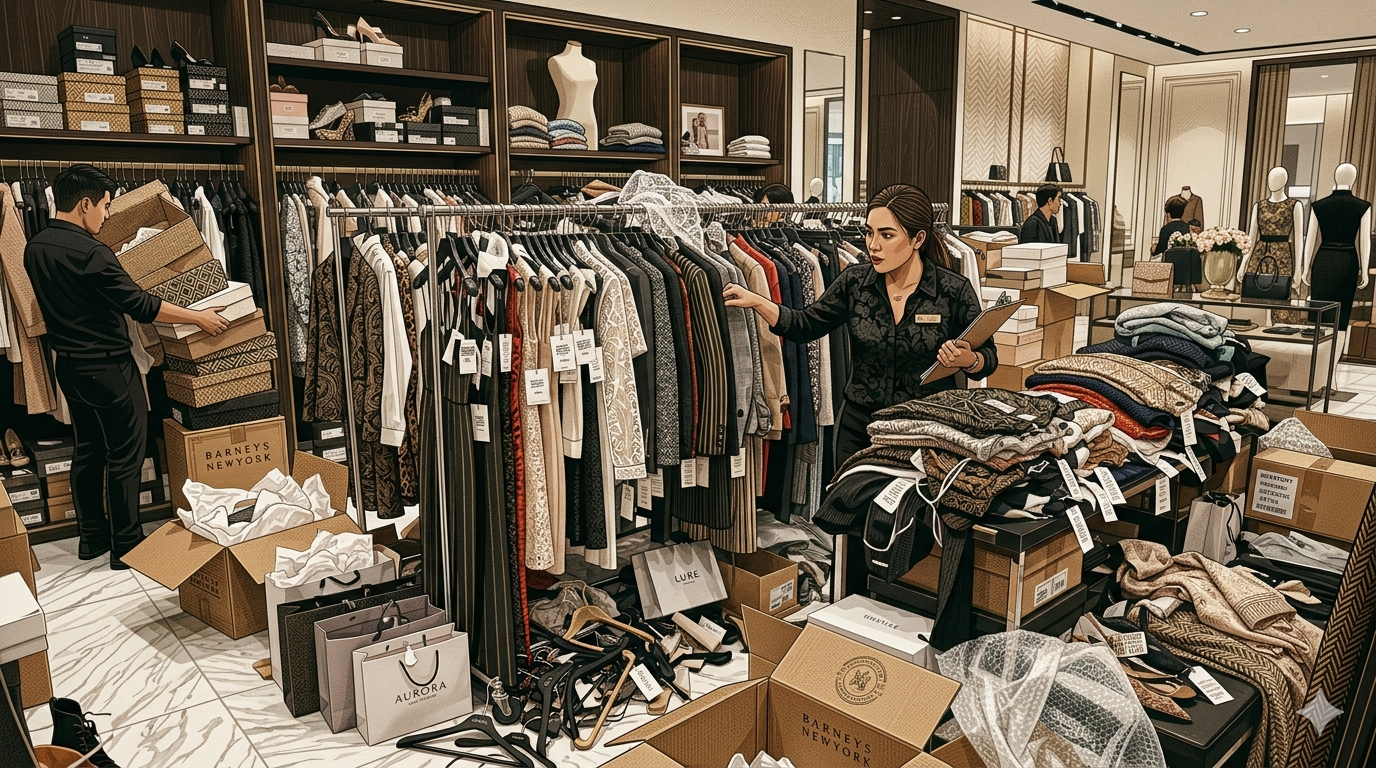
Fashion retail today is no longer about intuition; it's about precision, speed, and synchronization. For enterprises operating 10+ stores, the complexity of managing inventory, pricing, assortment, and omnichannel fulfillment has grown exponentially. Most brands have already adopted modern merchandising systems. The real question now is: Why are margins still under pressure? Why do stockouts and markdowns persist?
The answer lies not in the absence of systems, but in what those systems are missing.
The Reality of Modern Fashion Retail
Fashion brands operate in one of the most volatile retail environments where trends shift overnight and demand is hyper-local. Seasonal inventory has a short shelf life, and omnichannel expectations are non-negotiable.
Even with advanced merchandising systems in place, many organizations still struggle with:
- Excess inventory locked in the wrong locations
- Reactive markdowns eroding margins
- Disconnected planning across teams
- Slow decision cycles in a real-time market
Modern merchandising systems have solved the first generation of retail problems, but today's challenges require a more intelligent layer.
Why are Modern Merchandising Systems Essential?
At their core, modern merchandising systems were built to replace fragmented retail operations with unified, data-driven workflows.
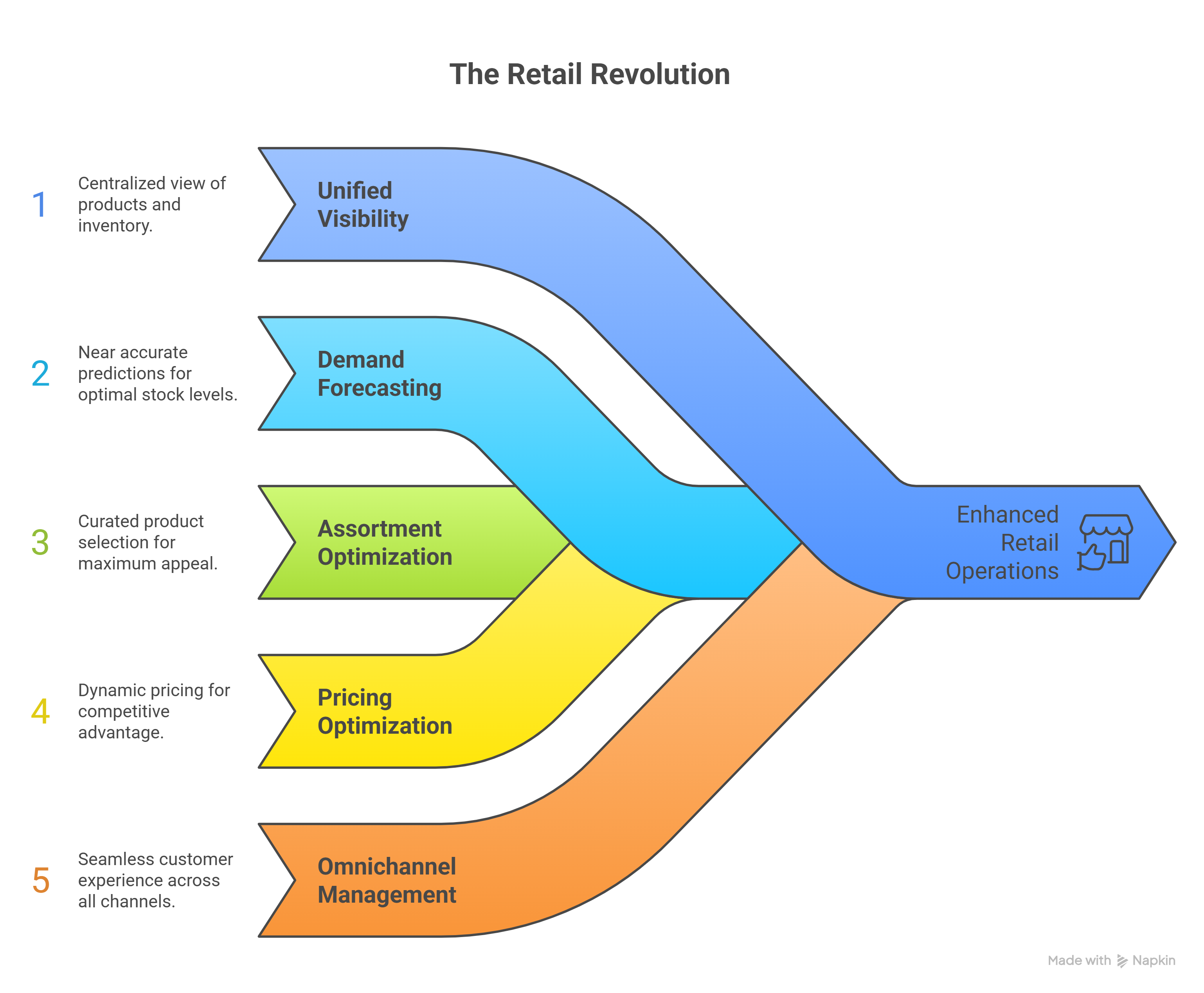
They enable:
- Unified Product and Inventory Visibility: A centralized system ensures consistency across stores, warehouses, and digital channels.
- Demand Forecasting and Planning: Predictive models analyze historical data and external signals to reduce overstock and stockouts.
- Assortment Optimization: Helping determine what to sell, where to sell it, and in what quantity.
- Pricing and Markdown Optimization: Dynamic capabilities to respond to demand fluctuations and competitive pressures.
- Omnichannel Order Management: Orchestrating fulfillment from BOPIS to ship-from-store.
What These Systems Still Don't Solve?
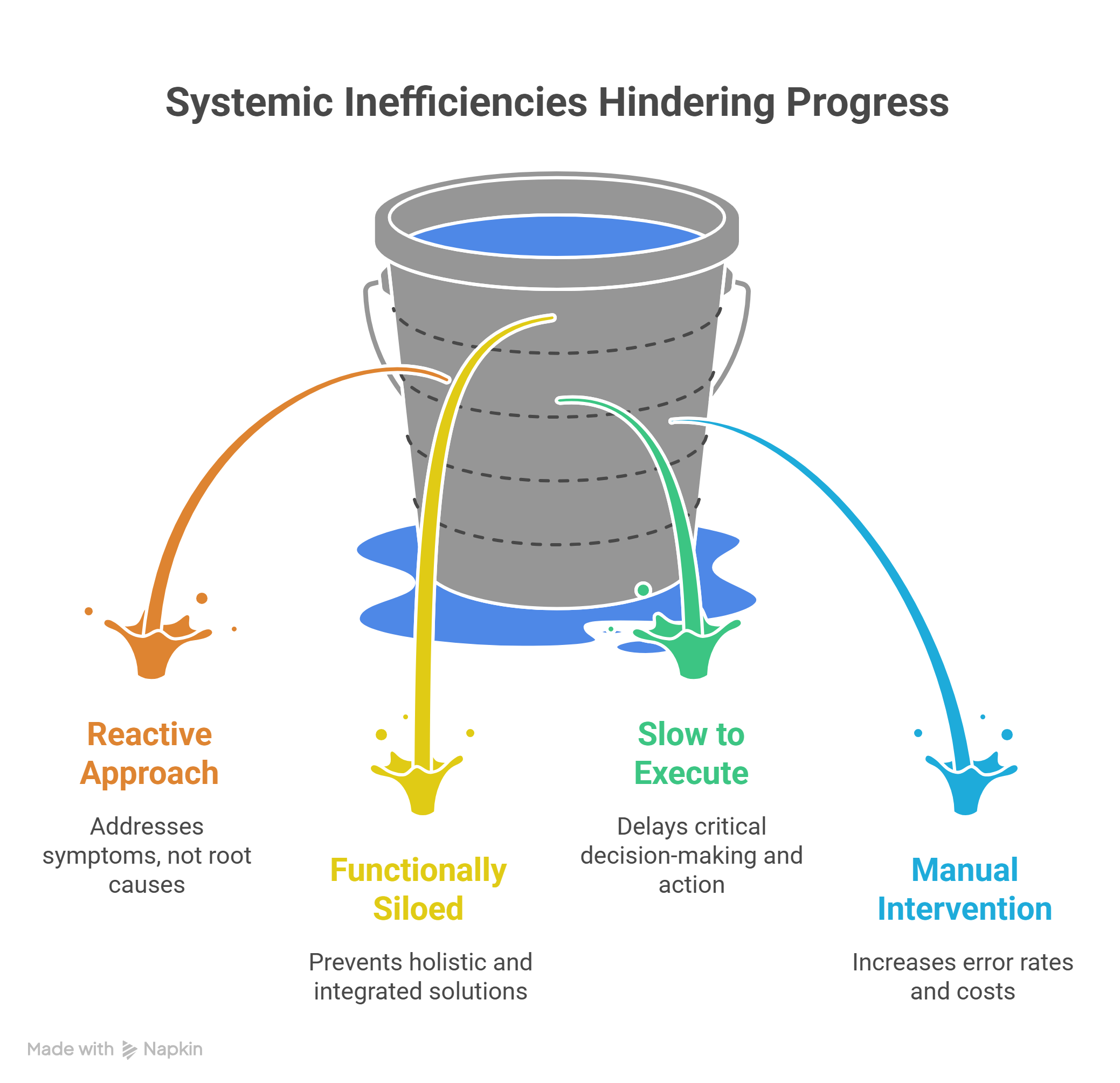
Despite their capabilities, most merchandising systems are still reactive, functionally siloed, and dependent on manual intervention. Analysis often leads to long discussion and approval cycles, which in fashion, equals lost margin.
The Missing Layer: AI That Acts, Not Just Analyzes
This is where the next evolution begins. Most systems today use AI for forecasting and analytics, but they stop short of execution. The real gap is: Who acts on the insights?
The missing layer is AI that doesn't just recommend but autonomously decides and executes. This represents a shift from tools to teammates, and from dashboards to decision-makers.
Introducing Agentic AI with Orkestra AI
Orkestra AI by Data-Hat AI is designed specifically to sit on top of existing merchandising systems, transforming them from passive platforms into active, decision-driven ecosystems.
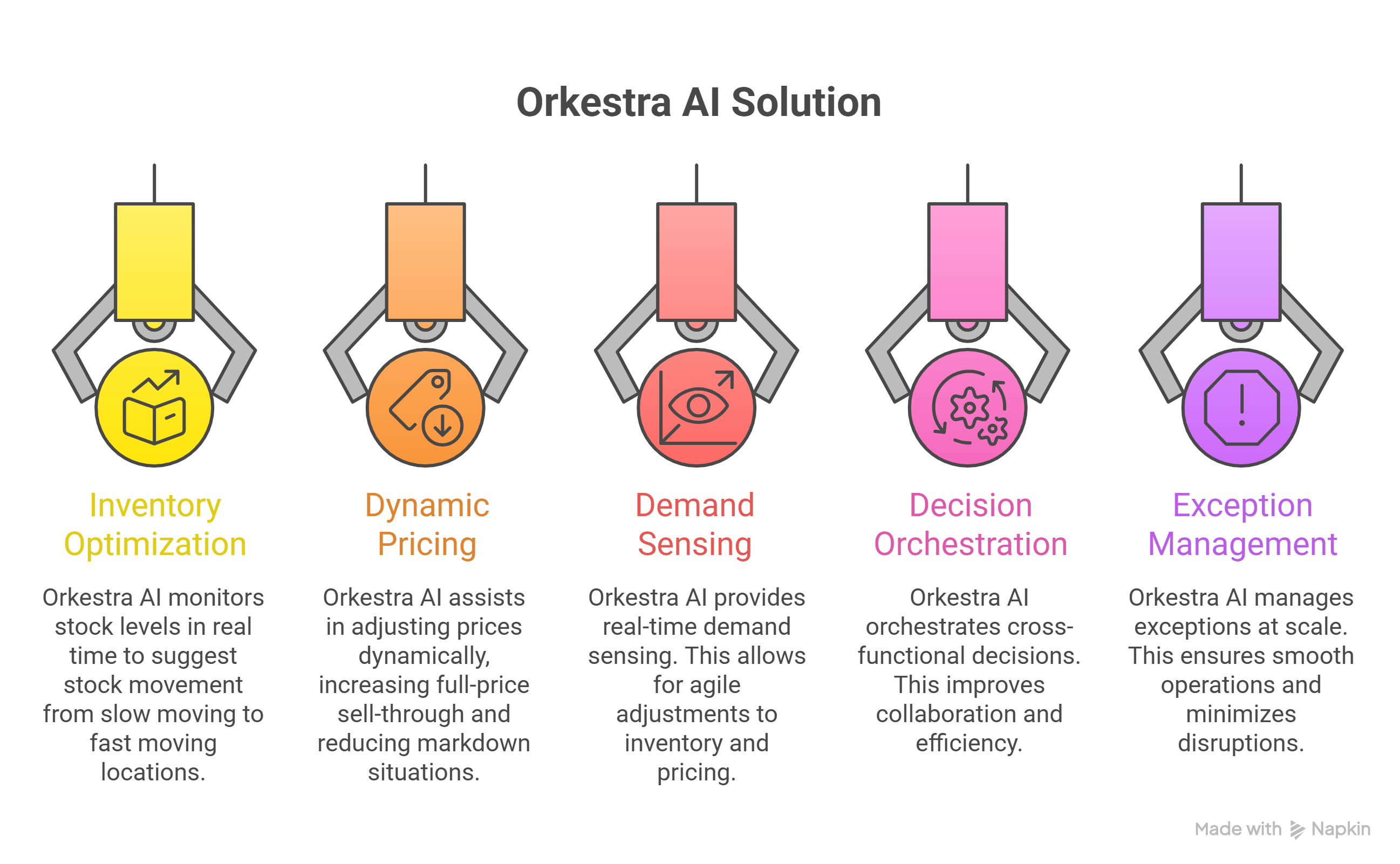
How Orkestra AI Fills the Gap:
- Autonomous Inventory Optimization: Continuously monitors sell-through and triggers redistribution or replenishment.
- Intelligent Markdown Execution: Detects early signs of underperformance and recommends/executes targeted markdowns.
- Real-Time Demand Sensing: Incorporates real-time signals and adjusts plans dynamically.
- Cross-Functional Decision Orchestration: Aligns pricing, allocation, and replenishment to support overall business goals.
- Exception Management at Scale: Resolves anomalies automatically or escalates intelligently.
Conclusion: The Competitive Advantage
The fashion brands that win today are not just those with the best designs, but those with the fastest insights, smartest decisions, and most efficient execution. Modern merchandising systems gave retailers visibility; AI agents like Orkestra AI deliver velocity and precision.
Are your systems just informing decisions, or actually making them happen?
Contact Data-Hat AI for a demo to turn your merchandising system into a living, decision-making engine.
Frequently Asked Questions
How can the ultimate guide to modern merchandise management systems for fashion brands help retail teams?
It provides practical guidance for improving planning, forecasting, and execution decisions so teams can reduce stock risk and improve customer outcomes.
Why is AI important for modern retail operations?
AI helps retailers process large, fast-changing datasets and generate better decisions for forecasting, inventory, pricing, and assortment in real time.
How do I get started with Data-Hat AI for this use case?
Start by identifying a high-impact category or process, connect core data sources, and run a focused pilot to measure uplift in forecast accuracy, availability, and margin.