Size Curve Optimization: How does Agentic AI End the Nightmare of Forced Markdowns?

Kshitij Kumar
Chief Data and AI Officer
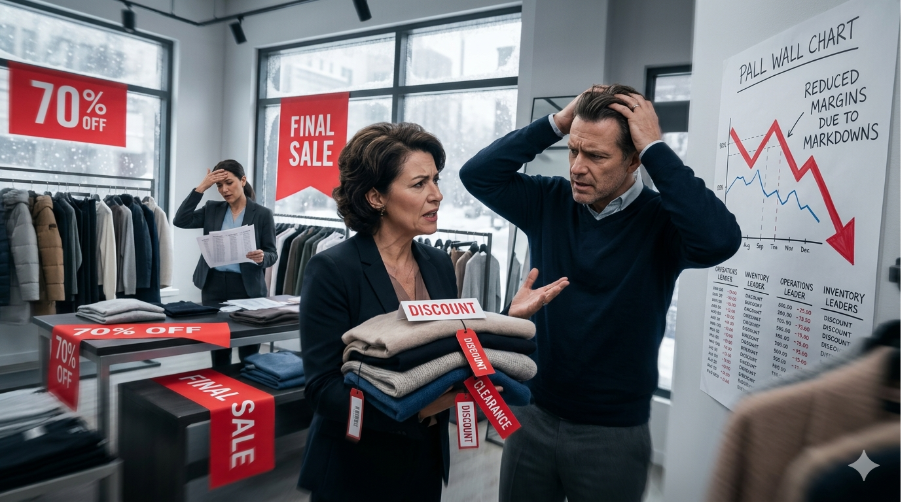
For large fashion brands, markdowns are often treated as an unavoidable cost of doing business. But beneath every rack of discounted inventory lies a deeper issue, not demand failure, but distribution failure. At the heart of this problem is one of the most overlooked levers in retail profitability: size curve optimization.
The Hidden Cost of Getting the Sizes Wrong
Every fashion designer, CEO, COO, and merchandiser has seen this scenario play out:
- Size M sells out in days
- Size S lingers for weeks
- Size XL goes straight to clearance
The product was right. The demand was real. But the size curve was wrong.
When inventory is allocated using static ratios or outdated assumptions, retailers are forced into a reactive cycle: mark down excess sizes, miss revenue on high-demand sizes, and rebalance inventory too late.
This is not just a merchandising issue. It is a data-action gap.
Why Traditional Size Curves Fail at Scale
As organizations expand store footprints, complexity multiplies. Demand varies across geographies, customer profiles shift by locality, product fit changes behavior by segment, and in-season trends evolve faster than planning cycles.
Yet most enterprises still rely on historical averages, manual planning, and fixed size ratios. These approaches assume uniformity where none exists, resulting in systemic overstock in the wrong sizes and forced markdowns to compensate.
Enter Agentic AI: A New Operating Model
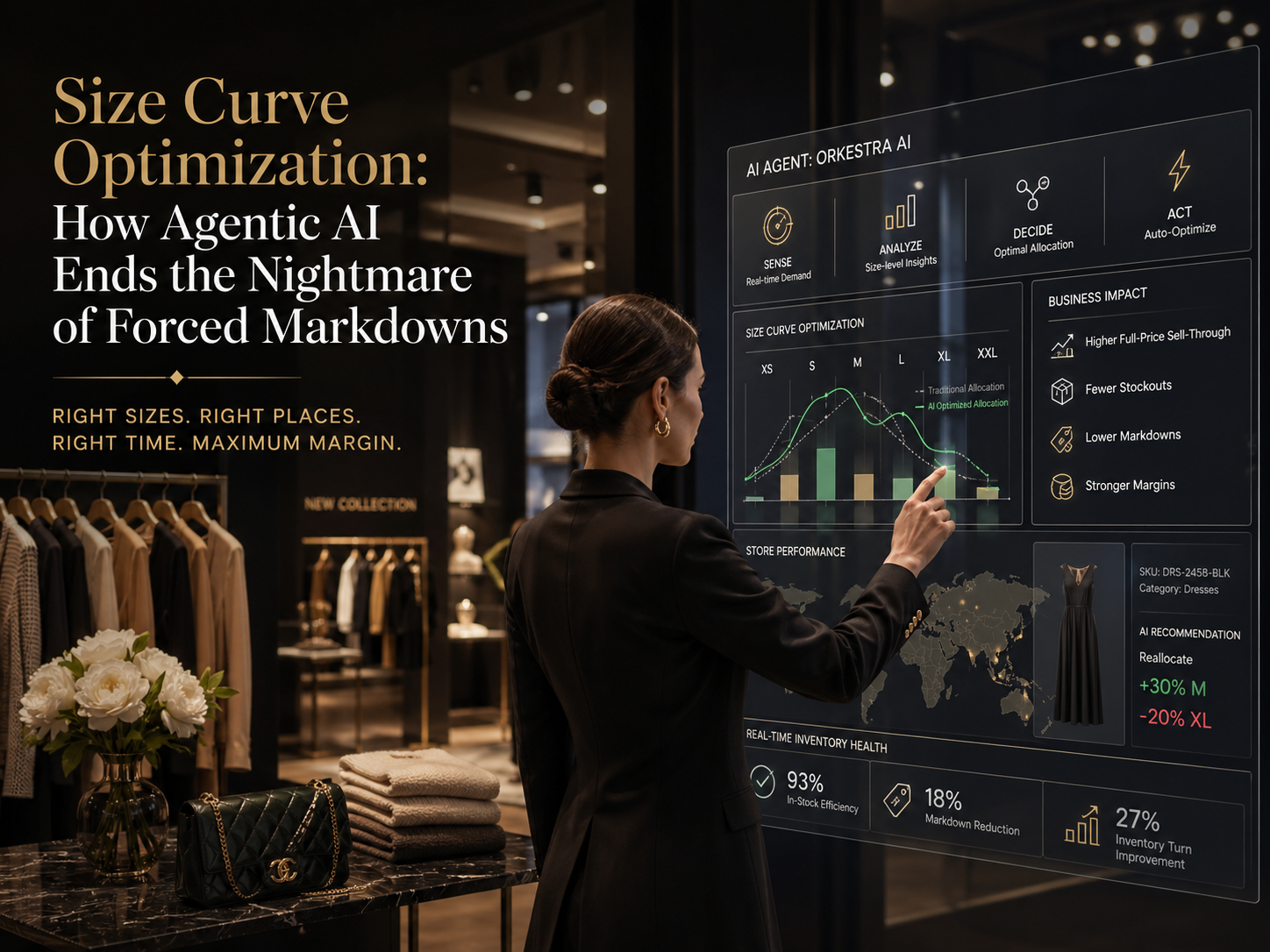
This is where agentic AI systems like Orkestra AI fundamentally change the game. Unlike traditional analytics tools that only provide insights, agentic AI acts, adapts, and optimizes continuously, bringing speed and precision to size curve decisions.
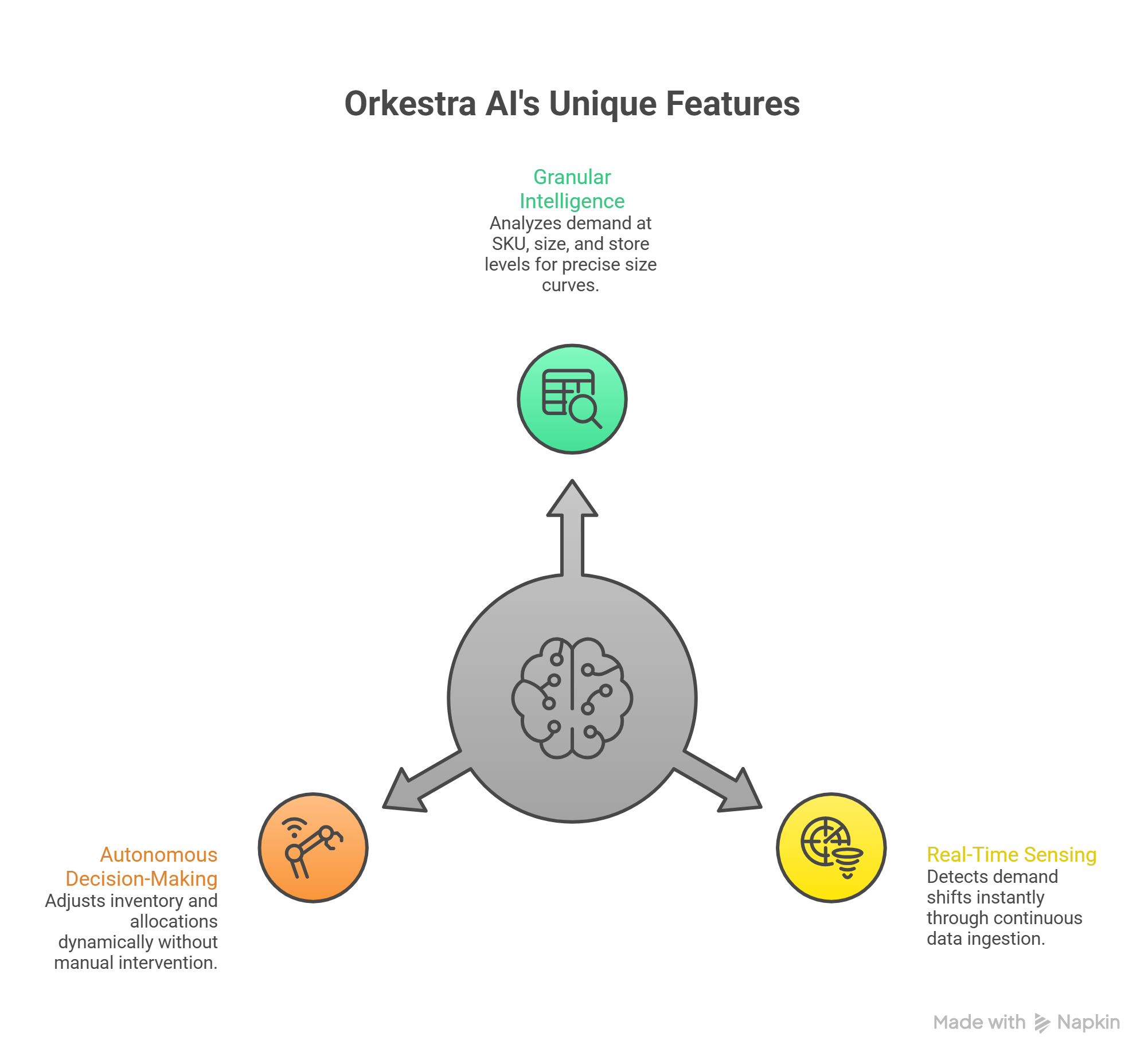
1. SKU-Size-Store Level Intelligence
Orkestra AI analyzes demand at the most granular level: SKU by size by store. This reveals which sizes sell faster in each location and how different products behave across customer segments.
2. Real-Time Demand Sensing
Traditional systems look backward. Orkestra AI looks forward in real time by continuously ingesting sales velocity, inventory movement, and early sell-through signals. This enables rapid correction before markdown risk builds up.
3. Autonomous Decision-Making
Orkestra AI uses intelligent agents that can dynamically adjust size allocations, trigger replenishment for high-demand sizes, reduce exposure to slow-moving sizes, and rebalance inventory across stores with minimal manual delay.
The Business Impact: From Markdown Recovery to Margin Expansion
- Reduced forced markdowns: Better alignment between supply and demand minimizes excess inventory in low-performing sizes.
- Increased full-price sell-through: High-demand sizes are replenished faster to capture revenue at peak pricing.
- Improved inventory productivity: Less dead stock and faster turns improve working capital efficiency.
- Better customer experience: Customers find their size when they want it, improving conversion and loyalty.
From Static Planning to Living Systems
Traditional merchandising runs on fixed plans. Agentic AI introduces a living system that learns continuously, adapts instantly, and executes autonomously. This transforms size curve optimization from a periodic planning task into a real-time competitive advantage.
The Strategic Takeaway
For fashion enterprises operating at scale, the path forward is clear: move beyond static size ratios, embrace granular demand-driven allocation, and deploy agentic AI to act at market speed.
With Orkestra AI, size curve optimization becomes more than a planning function. It becomes a profit engine. In a market where margins are under constant pressure, that shift can define the difference between reacting to demand and leading it.
Contact Data-Hat AI to set up a demo and explore how Orkestra AI can optimize your enterprise size curve decisions.
Frequently Asked Questions
How can size curve optimization: how does agentic ai end the nightmare of forced markdowns? help retail teams?
It provides practical guidance for improving planning, forecasting, and execution decisions so teams can reduce stock risk and improve customer outcomes.
Why is AI important for modern retail operations?
AI helps retailers process large, fast-changing datasets and generate better decisions for forecasting, inventory, pricing, and assortment in real time.
How do I get started with Data-Hat AI for this use case?
Start by identifying a high-impact category or process, connect core data sources, and run a focused pilot to measure uplift in forecast accuracy, availability, and margin.