
From Tragedy to Transformation: How AI and Conscious Habits Can Revolutionize Fashion's Environmental Impact

Kshitij Kumar
Chief Data and AI Officer
Introduction: Learning From History to Build a Better Future
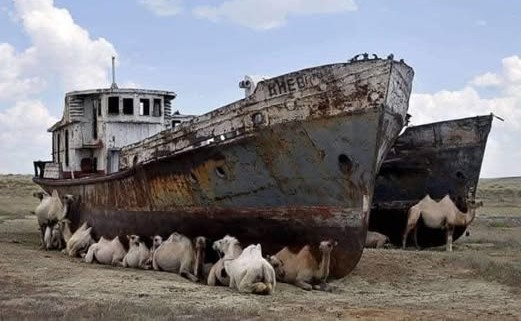
The Aral Sea stands as one of history's most significant environmental lessons, not because it represents inevitable doom, but because it illuminates the path forward. Once the world's fourth-largest lake, the Aral Sea's transformation from thriving ecosystem to desert basin teaches us a fundamental truth: environmental impact is not predetermined; it is the result of choices we make today.
The good news? We now have tools and knowledge that previous generations did not. We have artificial intelligence, data analytics, sustainable innovation, and most importantly, a global consciousness about environmental responsibility. The story of the Aral Sea is not a reason for despair; it is a catalyst for transformation.
This blog post explores how we can use the Aral Sea as a powerful lesson in sustainable fashion, and how emerging technologies and conscious consumer habits can prevent similar tragedies while creating a fashion industry that is both beautiful and regenerative.
The Aral Sea: A Watershed Moment for Environmental Awareness
Between the 1960s and 1980s, Central Asia underwent a dramatic transformation. Two major rivers, the Amu Darya and the Syr Darya, were diverted to irrigate cotton plantations, turning desert into farmland and making the region a global cotton supplier. The initial results seemed remarkable: production soared, economic output increased, and the region became a significant player in the global textile industry.
However, the consequences for the Aral Sea were severe. Without its primary water sources, the sea shrank dramatically. What was once a vibrant ecosystem became increasingly saline and toxic. Fishing communities that had thrived for generations faced economic collapse. Local populations experienced rising rates of respiratory illness, waterborne disease, and other health challenges.
But here's the crucial insight: this tragedy was not inevitable. It was the result of decisions made without full consideration of long-term environmental consequences. And that's precisely why it matters today.
The Aral Sea crisis represents a moment when the world lacked the tools, awareness, and frameworks to predict and prevent environmental damage at scale. Today, we have all three, and more.
The Evolution of Understanding: From Crisis to Consciousness
The Aral Sea catastrophe, while devastating, catalyzed a global awakening. It demonstrated that environmental damage can be both massive and measurable, and that prevention is infinitely more effective than remediation. This understanding has sparked a revolution in how we approach environmental challenges, particularly in resource-intensive industries like fashion.
Over the past few decades, we've learned critical lessons:
- Water is finite and precious: The Aral Sea showed us that water diversion at scale has cascading consequences. This knowledge now informs water management strategies across industries.
- Supply chains have hidden costs: The cotton industry's impact on the Aral Sea revealed that the true cost of a product extends far beyond its price tag. This has led to greater transparency and accountability in global supply chains.
- Prevention is possible: The restoration efforts in Kazakhstan, particularly the North Aral Sea recovery project, demonstrate that with commitment and resources, environmental damage can be mitigated, and ecosystems can begin to heal.
- Collective action matters: The international cooperation required to address the Aral Sea crisis showed that environmental challenges demand coordinated, multi-stakeholder solutions.
These lessons have become the foundation for a new approach to sustainable fashion, one that is data-driven, technology-enabled, and fundamentally optimistic about our capacity to create positive change.
AI: The Game-Changer for Sustainable Fashion
Artificial intelligence is revolutionizing how the fashion industry approaches sustainability. What was once a matter of good intentions and manual tracking is now becoming a matter of precision, prediction, and optimization. Here's how AI is transforming fashion's environmental footprint:
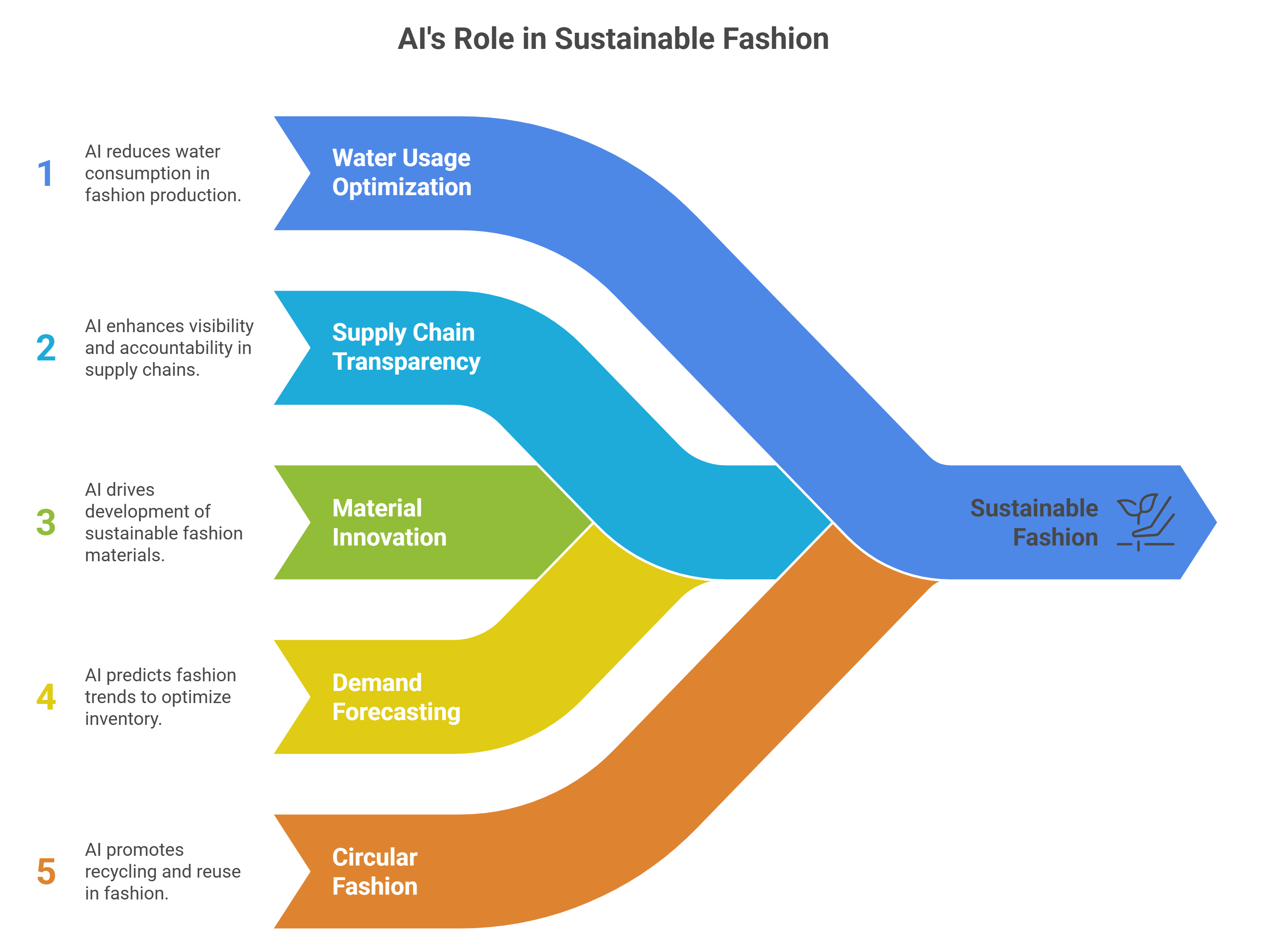
1. Water Usage Optimization
AI-powered systems can now monitor and optimize water consumption in textile production in real-time. Machine learning algorithms analyze data from manufacturing facilities to identify inefficiencies, predict water needs, and recommend conservation strategies.
Real-world impact: Companies using AI water management systems have reduced water consumption by 20-40% in dyeing and finishing processes. These systems can identify leaks, optimize washing cycles, and even predict equipment failures before they occur, preventing both water waste and costly downtime.
For cotton production specifically, AI is being used to optimize irrigation schedules. By analyzing weather patterns, soil moisture, and crop growth stages, AI systems can ensure that cotton receives exactly the water it needs, no more, no less. This precision irrigation reduces water consumption while maintaining crop yields.
2. Supply Chain Transparency and Traceability
Blockchain technology combined with AI creates an unprecedented level of transparency in fashion supply chains. Every step of a garment's journey, from cotton field to finished product, can be tracked, verified, and analyzed.
Real-world impact: Consumers can now scan a QR code on a garment and see exactly where the cotton was grown, how much water was used, what certifications were obtained, and what environmental practices were followed. This transparency creates accountability and allows consumers to make informed choices.
AI algorithms analyze this data to identify high-risk areas in supply chains, regions where water stress is high, where environmental regulations are weak, or where unsustainable practices are occurring. This allows brands to proactively address problems before they become crises.
3. Material Innovation and Optimization
AI is accelerating the development of new, more sustainable materials. Machine learning algorithms can analyze thousands of material combinations, predict their properties, and identify the most promising candidates for development.
Real-world impact: AI-assisted research has led to the discovery of new textile materials made from agricultural waste, mushroom mycelium, lab-grown fibres, and other innovative sources. These alternatives require significantly less water than conventional cotton while maintaining high quality and performance.
AI is also optimizing the use of existing sustainable materials. By analyzing production data, AI can determine the optimal blend of materials for different applications, maximizing durability and minimizing waste.
4. Demand Forecasting and Inventory Optimization
One of the biggest sources of waste in fashion is overproduction. Brands manufacture more than they can sell, leading to excess inventory that often ends up in landfills. AI-powered demand forecasting is changing this.
Real-world impact: Advanced machine learning models analyze consumer behavior, social media trends, weather patterns, and dozens of other variables to predict demand with remarkable accuracy. This allows brands to produce exactly what consumers want, reducing overproduction by 30-50%.
Less production means less water consumption, less chemical pollution, less transportation emissions, and less waste. It's a win-win: better business outcomes and better environmental outcomes.
5. Circular Fashion and Recycling Innovation
AI is making circular fashion viable at scale. Computer vision and machine learning can now automatically sort textile waste by fibre type, color, and quality, a task that was previously done manually and inefficiently.
Real-world impact: AI-powered sorting systems can process textile waste 10 times faster than manual sorting, with greater accuracy. This makes textile recycling economically viable, enabling the creation of new fibres from old garments. Recycled fibres require a fraction of the water needed for virgin cotton production.
AI is also optimizing the recycling process itself, identifying the best uses for different types of textile waste and minimizing the need for virgin materials.
How does Data-Hat AI's Agentic System Accelerate Sustainable Fashion Transformation?
While AI tools are transforming fashion through optimization and analytics, the next evolution is agentic AI systems that don't just analyze data, they autonomously coordinate action across complex enterprise ecosystems. This is where Data-Hat AI plays a pivotal role.
Data-Hat AI's agentic system functions as an intelligent sustainability orchestrator for fashion enterprises. Rather than operating as a single dashboard or isolated analytics tool, it deploys interconnected AI agents across the value chain, from optimizing production to distribution and circular recovery.
Conscious Consumer Habits: The Human Element
While AI provides powerful tools for optimization, the real transformation of fashion requires a shift in consumer consciousness and habits. The good news is that this shift is already underway, and it's accelerating.
Building Better Habits
Mindful Consumption: The most sustainable garment is the one you already own. By adopting a habit of asking "Do I really need this?" before making a purchase, consumers can dramatically reduce their fashion footprint. Studies show that the average garment is worn only 10 times before being discarded. By intentionally choosing pieces you'll wear 50+ times, you reduce your environmental impact by 80%.
Quality Over Quantity: Investing in fewer, higher-quality pieces that last for years is not just better for the environment, it's often more economical. A $100 shirt worn 100 times costs $1 per wear. A $20 shirt worn 5 times costs $4 per wear. Conscious consumers are learning this calculus and adjusting their shopping habits accordingly.
Second-Hand and Circular Models: The resale and rental markets for fashion are booming. Platforms that facilitate buying, selling, and renting used clothing are growing at 25% annually, far outpacing the growth of new clothing sales. This shift in habits, from ownership to access, from new to renewed, is fundamentally changing fashion's environmental impact.
Care and Maintenance: How we care for our clothes matters. Washing in cold water, air drying, and learning basic repair skills can extend a garment's lifespan by years. These simple habits, multiplied across millions of consumers, translate to massive reductions in water consumption, energy use, and waste.
The Habit Loop: Making Sustainability Stick
Behavioral science tells us that habits form through repetition and reward. The fashion industry is leveraging this insight to make sustainable choices the default:
- Gamification: Apps that track sustainable fashion choices and reward users with points, discounts, or social recognition are making conscious consumption engaging and fun.
- Social Proof: As more people adopt sustainable fashion habits, they become normalized. When your friends are buying second-hand and caring for their clothes, you're more likely to do the same.
- Friction Reduction: Brands are making sustainable choices easier. Subscription services for sustainable fashion, one-click rental options, and AI-powered styling recommendations for existing wardrobes all reduce the friction associated with conscious consumption.
- Identity Alignment: People adopt habits that align with their identity. As "conscious consumer" becomes an aspirational identity, more people adopt the habits associated with it.
The Aral Sea as a Positive Catalyst: Lessons for Prevention
The Aral Sea tragedy, while devastating, has become a powerful catalyst for positive change. It has taught us what happens when we fail to consider environmental consequences at scale, and it has motivated the development of systems and practices designed to prevent similar tragedies.
Lesson 1: Measurement and Transparency Enable Change
The Aral Sea crisis was visible, you could see the shrinking lake, the stranded boats, the expanding desert. This visibility created accountability and motivated action. Today, we're applying this lesson across industries.
AI-powered environmental monitoring systems provide real-time data on water usage, chemical pollution, carbon emissions, and other environmental metrics. This transparency creates accountability and enables rapid course correction. Brands that publish detailed environmental data are increasingly the norm, not the exception.
Lesson 2: Systemic Change Requires Systemic Solutions
The Aral Sea couldn't be saved by individual action alone. It required coordinated, multi-stakeholder efforts involving governments, international organizations, and local communities. The same is true for transforming fashion.
AI and data analytics are enabling the kind of systemic coordination that was previously impossible. Supply chain networks can now be optimized holistically, with AI identifying the most impactful interventions across the entire system. Industry standards can be enforced automatically through blockchain-based verification systems.
Lesson 3: Prevention is Infinitely More Effective Than Remediation
Restoring the Aral Sea is far more difficult and expensive than preventing its destruction would have been. This lesson is driving a prevention-focused approach to environmental challenges in fashion.
AI predictive models can now identify environmental risks before they become crises. Water stress in cotton-growing regions can be predicted years in advance, allowing for proactive adaptation. Supply chain vulnerabilities can be identified and addressed before they impact production or the environment.
The Future of Fashion: A Vision of Possibility
Imagine a fashion industry where:
- Every garment is produced with full knowledge of its environmental impact. AI systems track water usage, chemical inputs, carbon emissions, and waste generation at every stage of production. Consumers can see this data and make informed choices.
- Water is used efficiently and regeneratively. AI-optimized irrigation reduces cotton production water consumption by 50%. Dyeing processes use 80% less water. Wastewater is treated and recycled. The Aral Sea tragedy becomes a historical lesson, not a current crisis.
- Circular fashion is the norm, not the exception. AI-powered sorting and recycling systems make it economically viable to recycle textiles at scale. Garments are designed for durability and recyclability from the start. The concept of "waste" becomes obsolete.
- Conscious consumption is the default. AI styling assistants help consumers maximize their existing wardrobes. Subscription and rental models make access to new fashion possible without ownership. The average garment is worn 100+ times before being recycled.
- Innovation is accelerating. AI-assisted research is developing new materials that require a fraction of the water and chemicals of conventional textiles. Lab-grown fibers, agricultural waste materials, and other innovations are becoming mainstream.
- Supply chains are transparent and accountable. Blockchain and AI systems ensure that every actor in the supply chain adheres to environmental and ethical standards. Violations are detected automatically and addressed immediately.
This vision is not science fiction. The technologies exist today. The practices are being implemented now. The only question is: how quickly can we scale them?
What You Can Do Today
The transformation of fashion is not something that happens to us, it's something we create through our choices and actions. Here's how you can participate:
1. Adopt Conscious Consumption Habits
- Before buying something new, ask yourself: "Will I wear this 50+ times?" If the answer is no, don't buy it.
- Invest in quality pieces that will last for years.
- Explore second-hand, rental, and subscription options.
- Learn basic repair skills and care for your clothes intentionally.
2. Support Brands Using AI for Sustainability
- Look for brands that publish detailed environmental data about their products.
- Support companies that use AI and data analytics to optimize their environmental impact.
- Choose brands that are transparent about their supply chains and use blockchain or similar technologies for verification.
3. Demand Transparency and Accountability
- Ask brands where their materials come from and how they're produced.
- Use your voice on social media to celebrate brands doing the right thing and hold others accountable.
- Support policies and regulations that require environmental transparency in supply chains.
4. Embrace the Circular Economy
- Participate in the resale and rental markets for fashion.
- Donate or swap clothes rather than discarding them.
- Support brands and platforms that facilitate circular fashion models.
5. Stay Informed and Share Knowledge
- Learn about the environmental impact of fashion and share this knowledge with others.
- Engage with the growing community of conscious consumers and sustainability advocates.
- Support research and innovation in sustainable fashion and materials.
Conclusion: From Crisis to Opportunity
The Aral Sea represents a critical juncture in human history, a moment when we failed to consider the environmental consequences of our choices at scale. But it also represents something more hopeful: a turning point. The Aral Sea tragedy catalyzed a global awakening about environmental responsibility and motivated the development of systems and practices designed to prevent similar disasters.
Today, we have the tools, knowledge, and consciousness to create a fashion industry that is beautiful, sustainable, and regenerative. Artificial intelligence is providing unprecedented capabilities for optimization, transparency, and innovation. Conscious consumers are shifting their habits and demanding better from the brands they support. Together, these forces are transforming fashion from an industry of extraction and waste into an industry of creation and renewal.
The Aral Sea cannot be fully restored. But the future can be different. By learning from this tragedy, embracing AI-powered solutions, and adopting conscious consumption habits, we can create a fashion industry that protects rather than destroys, that regenerates rather than depletes, and that enriches both our lives and our planet.
The question is not whether this transformation is possible. The question is: will you be part of making it happen? Contact Data-Hat AI to make your enterprise sustainable.
References
- [1] United Nations Development Programme. (1999). Aral Sea Basin Programme. UN Chronicle.
- [2] Grabish, B. (2017, June 12). Dry Tears of the Aral. UN Chronicle. Retrieved from https://www.un.org/en/chronicle/article/dry-tears-aral
- [3] United Nations Environment Programme. (2018, December 14). Cleaning up couture: what's in your jeans? Retrieved from https://www.unep.org/news-and-stories/story/cleaning-couture-whats-your-jeans
- [4] Ellen MacArthur Foundation. (2017). A New Textiles Economy: Redesigning Fashion's Future. Retrieved from https://www.ellenmacarthurfoundation.org/
- [5] McKinsey & Company. (2023). The State of Fashion 2024: Navigating Turbulence. Fashion Industry Reports.
Frequently Asked Questions
How can from tragedy to transformation: how ai and conscious habits can revolutionize fashion's environmental impact help retail teams?
It provides practical guidance for improving planning, forecasting, and execution decisions so teams can reduce stock risk and improve customer outcomes.
Why is AI important for modern retail operations?
AI helps retailers process large, fast-changing datasets and generate better decisions for forecasting, inventory, pricing, and assortment in real time.
How do I get started with Data-Hat AI for this use case?
Start by identifying a high-impact category or process, connect core data sources, and run a focused pilot to measure uplift in forecast accuracy, availability, and margin.